Wellington
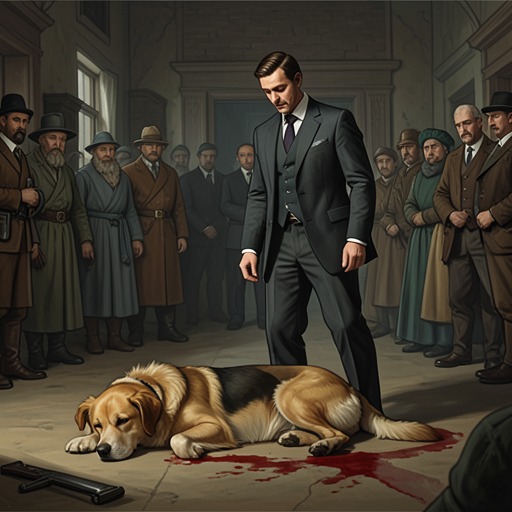
The Curious Incident of the Dog in the Night-TimeWellington is the dog whose killing transforms Christopher’s investigation into a crisis of family trust and personal safety. Christopher identifies Father as Wellington’s killer, and later gives that death as the reason he fled and does not want to return to Swindon to live with him.
Identity and Significance
Wellington is identified as a dog, and his death is the central fact Christopher gives when explaining why he is frightened of Father. The evidence here does not further describe Wellington’s life or his relationship with his owner; instead, it shows how the killing becomes consequential through Christopher’s response to it.
The Killing and Christopher’s Response
When Christopher tells Mrs. Alexander that he intends to live with Mother, he explains that Father killed Wellington and lied to him. He says he is frightened to remain in the house with Father, linking the dog’s death directly to his decision to leave. Wellington’s killing is therefore not merely the subject of Christopher’s investigation: it changes where he feels safe living.
Christopher gives the same reason when asked why he ran away. He says that Father killed Wellington and that he was frightened of him. The recurrence matters: Christopher presents the killing consistently as the cause of his fear, rather than as an isolated discovery with no bearing on his actions.
Consequences and Narrative Role
Christopher’s statements place Wellington’s death at the intersection of two revelations: Father killed the dog, and Father lied to Christopher. Together, these facts break Christopher’s confidence in the home as a safe place. He says Mother is in London and that he wants to live with her; when asked whether he wants to return to Swindon or stay where he is, he chooses to stay. Wellington’s death thus drives a chain of consequences extending from the investigation to Christopher’s flight and his refusal, at that moment, to go back to Father.
The evidence gives Wellington little independent presence beyond the fact that he is a dog who was killed. His narrative importance lies in the weight of that fact: the death exposes Father’s betrayal to Christopher and becomes the reason Christopher can state for leaving home and remaining away.